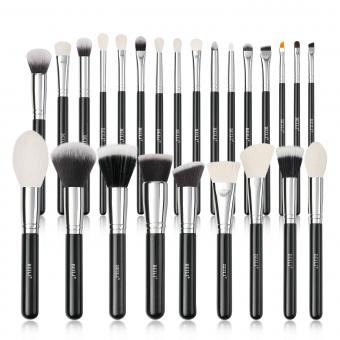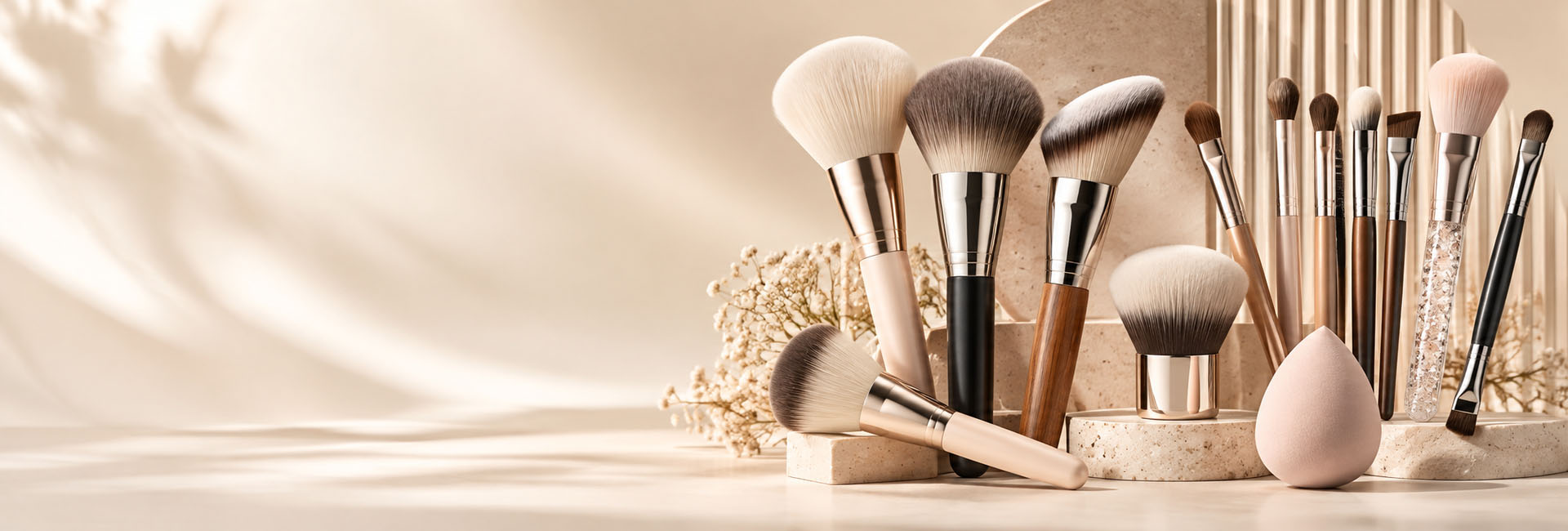
When choosing a makeup brush, most people focus on the bristle material or overall appearance. However, brush shape is just as important as the fiber itself.
A flat brush, a rounded brush, an angled brush, and a tapered brush can create very different application results even when they use the same bristle material.
For beauty brands developing a makeup brush collection, understanding these differences is especially important. Brush shape affects product pickup, precision, blending, coverage, and the overall user experience.
In this guide, we explain the most common makeup brush shapes and where each one works best.
The shape of a brush determines how the bristles contact the skin and distribute makeup.
Different shapes can influence:
Product coverage
Blending performance
Application speed
Precision
Product pickup
Final makeup finish
For example, a dense flat-top brush can provide strong coverage with liquid foundation, while a fluffy round brush is better suited to diffusing powder products.
This is why selecting the right brush shape should start with the intended application.
Flat makeup brushes have a relatively straight and even brush head.
They are commonly used when precision and controlled product placement are important.
Foundation
Concealer
Eyeshadow
Lip products
The flat surface allows makeup to be applied in a controlled direction.
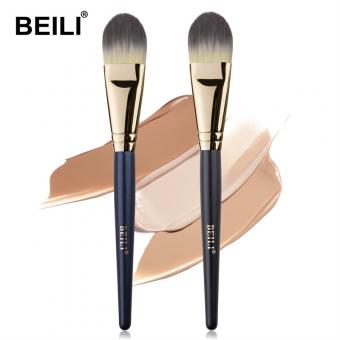
A dense flat foundation brush can help distribute liquid or cream foundation evenly, while a smaller flat concealer brush can provide more precise coverage around the eyes and other small areas.
Flat brushes are especially useful for beauty products that require controlled application and defined edges.
Round brushes have a curved or dome-shaped brush head.
They are commonly used for soft blending and diffused application.
Powder
Blush
Foundation
Eyeshadow
Highlighter
A rounded brush can move smoothly across larger areas of the face while creating a softer transition.
For example, a round powder brush can distribute loose or pressed powder evenly without creating harsh edges.
BEILI's product range includes round-top foundation and other rounded brush designs intended for blending and complexion applications.
Angled brushes have a slanted brush head that provides a natural application direction for specific areas of the face.
Contour
Blush
Bronzer
Brows
Eyeliner
An angled contour brush can follow the natural structure of the cheekbones, jawline, and forehead.
This makes angled shapes particularly useful when precision and facial definition are important.
Angled brushes can also be useful for brow and eyeliner products because the edge of the brush provides greater control.
Tapered brushes gradually become narrower toward the tip.
This gives the brush both a broader base and a more precise point.
Concealer
Highlighter
Nose contour
Detail work
Eyeshadow blending
The main advantage of a tapered brush is versatility.
The wider section can blend product over a larger area, while the tip can reach smaller areas around the nose, eyes, and other facial contours.
A tapered brush can therefore be a useful choice for brands developing multi-purpose makeup tools.
A flat-top brush has a dense brush head with a relatively flat surface.
This shape is particularly popular for complexion products.
Liquid foundation
Cream foundation
BB cream
Tinted moisturizer
The dense fibers can help distribute liquid or cream formulas evenly while providing stronger coverage.
Flat-top foundation brushes are often selected when the desired result is a polished, high-coverage finish.
BEILI currently offers flat-top foundation brush designs using synthetic fibers for liquid and cream applications.
Fluffy brushes have longer, softer, and more loosely arranged fibers.
Their main advantage is controlled diffusion.
Setting powder
Blush
Bronzer
Highlighter
Eyeshadow blending
Instead of concentrating makeup in one area, fluffy brushes can distribute product more lightly.
This makes them useful for achieving a softer and more natural finish.
The size and density of a fluffy brush can still vary significantly, so brands should select the exact configuration according to the intended product.
Precision brushes are typically smaller and more narrowly shaped.
Their purpose is to provide greater control in small areas.
Eyeliner
Brows
Detail eyeshadow
Lip application
Spot concealing
Although these brushes may appear simple, small differences in tip shape and stiffness can significantly affect their performance.
For example, a firm angled brow brush is designed for controlled strokes, while a soft detail brush may be better suited to blending small areas of eyeshadow.
Fan brushes have a wide, thin arrangement of bristles that spreads outward like a fan.
Highlighter
Light powder application
Removing excess powder
Soft contouring
Fan brushes are less dense than many traditional makeup brushes.
They are therefore useful when a lighter application is preferred.
Their distinctive shape can also provide visual differentiation for beauty brands looking to create a more varied brush collection.
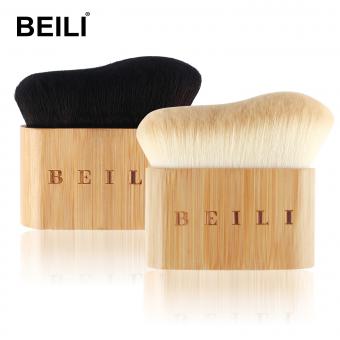
Kabuki brushes are generally characterized by dense bristles and a compact brush head.
They can be designed in several shapes, including:
Flat-top
Rounded
Angled
Domed
Foundation
Powder
Bronzer
Blush
Buffing
Because “kabuki” describes a family of brush designs rather than one exact shape, brands should evaluate the actual head shape, density, and intended application when choosing a kabuki brush.
BEILI offers kabuki-style foundation and face brushes with synthetic bristles and aluminum ferrules.
There is no single best brush shape.
The right shape depends on the product and desired finish.
| Brush Shape | Best For | Main Advantage |
|---|---|---|
| Flat | Foundation, concealer, eyeshadow | Controlled application |
| Round | Powder, blush, blending | Soft diffusion |
| Angled | Contour, blush, brows | Directional control |
| Tapered | Concealer, highlighting, detail | Precision + blending |
| Flat-Top | Liquid foundation | High coverage |
| Fluffy | Powder, bronzer, eyeshadow | Light application |
| Precision | Brows, liner, details | Fine control |
| Fan | Highlighter, finishing powder | Lightweight application |
| Kabuki | Foundation, powder, bronzer | Dense buffing |
For a complete makeup brush collection, using several different shapes is usually more practical than relying on one universal design.
Brush shape alone does not determine performance.
Shape + density + fiber + length work together.
For example, two round brushes may have completely different applications.
A densely packed round brush may be suitable for foundation or buffing.
A loose, fluffy round brush may be better for powder or finishing products.
The same principle applies to angled and tapered brushes.
When developing a product, the shape should therefore be specified together with the fiber characteristics.
One effective way to organize a makeup brush collection is by application.
Foundation Brush
Concealer Brush
Powder Brush
Blush Brush
Contour Brush
Highlighter Brush
Eyeshadow Brush
Blending Brush
Smudge Brush
Eyeliner Brush
Brow Brush
Precision Brush
Lip Brush
This approach allows beauty brands to build collections around actual customer needs rather than simply selecting random brush shapes.
BEILI's current product range already covers foundation, powder, concealer, contour, blending, eyeshadow, brow, and lip applications, making it possible to organize products around these use cases.
Brush shape can also affect how a product is positioned in the market.
For example:
Simple, versatile shapes can create an easy-to-use collection.
A wider selection of specialized and precision shapes can support more advanced application techniques.
Distinctive brush shapes, refined materials, and coordinated design can contribute to a more sophisticated product experience.
Compact or multi-functional brush designs can help reduce the number of tools required.
This means brush design is not only a technical decision. It can also become part of a brand's product strategy.
A well-designed collection usually contains a balance of:
Large brushes
For complexion and powder application.
Medium brushes
For blush, contour, and general blending.
Small brushes
For eyes, brows, lips, and detailed applications.
A starter collection may focus on essential shapes, while a professional collection can include more specialized designs.
The goal is not to have as many brushes as possible.
The goal is to make sure each brush has a clear function.
Understanding makeup brush shapes makes it easier to select the right tool for each application.
Flat brushes provide control, round brushes support soft blending, angled brushes offer directional precision, and tapered brushes combine coverage with detail.
For beauty brands, brush shape should be considered together with:
Bristle material
Bristle density
Brush head size
Handle design
Ferrule
Intended application
Target customer
Product positioning
A well-planned brush collection can combine different shapes to create a complete and practical makeup tool range.
At BEILI, we provide a wide range of makeup brush designs for face, eye, brow, and lip applications, including synthetic and natural hair options. Our product range includes individual brushes, brush sets, and other cosmetic tools for different market and product requirements.
Explore BEILI makeup brush collections and discover the brush shapes that best fit your next product line.
1102, Hefei Software Park Luyang Incubation Park, Luyang District, Hefei City, Anhui Province
電話 : +86 13355501971
Whatsapp : +86 13355501971
Eメール : jenny@beilimakeup.com


フレンドリーなリンク :
Dingsheng Cosmetics Packaging サポートされているIPv6ネットワーク